
Podcast Appearance
How Insurance Agencies Can Own Their Marketing With Jake Cash
Jake Cash on the Modern Insurance Agent Podcast with David Denning
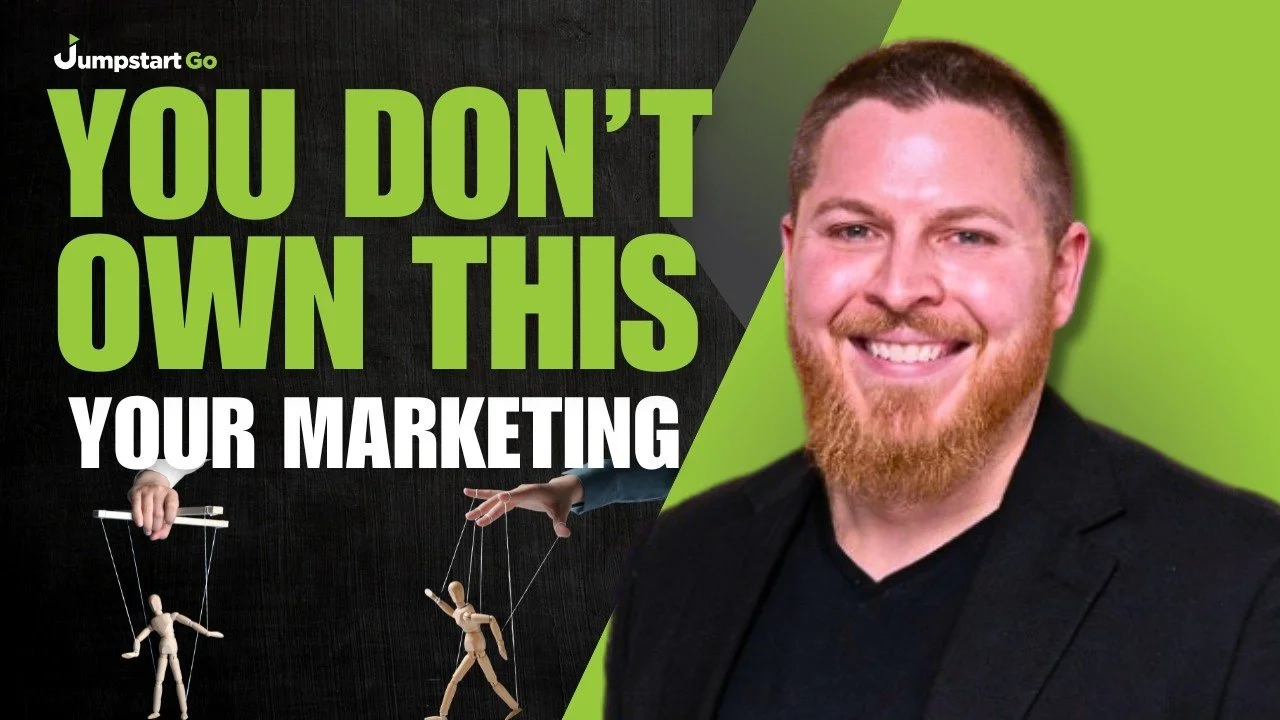
Most insurance agencies hand over full control of their marketing to vendors, and never realize the risk until it's too late. In this episode, Jake Cash, founder of Senryx Group and former head of insurance marketing strategy for Geico's national agency network, breaks down why vendor dependence is one of the most dangerous blind spots in agency growth and what it actually takes to build an insurance marketing system your agency owns. If you're an independent or captive agency owner who wants to grow predictably without being one carrier change, one vendor contract, or one lost producer away from starting over, this episode is for you.
What We Cover
Identify the five types of marketing dependence that put insurance agencies at risk: carrier, person, channel, platform, and vendor, and learn which to fix first at each stage of growth.
Ask the right ownership questions before signing with any insurance marketing vendor so you never lose access to your own accounts or assets.
Apply the Google 7-11-4 rule to your local insurance agency marketing mix to build trust with prospects faster and win more business.
Learn the single marketing trait the top 10% of PNC agencies share across every data cut, and how to build it into your own growth strategy.
Spot the hidden signs of vendor dependence in your current insurance marketing setup before they become an expensive problem.
Build a diversified insurance agency growth system with roughly equal thirds from referrals, digital marketing, and traditional marketing.
Use AI to increase profitability and efficiency on the backend of your agency without triggering the distrust that AI-forward messaging creates with consumers.
Avoid the generic AI content trap that is actively damaging insurance agency credibility and learn what personalized AI use actually looks like.
Rediscover traditional insurance marketing tactics like direct mail and client events that are outperforming digital channels precisely because most agencies have abandoned them.
Build a proactive retention strategy that reduces policy shopping, lowers churn, and increases lifetime client value across your book.
Take a free marketing independence assessment to find where your agency's biggest growth vulnerabilities are hiding right now.
Separate AI hype from practical application so your insurance agency stays ahead without wasting budget chasing trends that won't last.
Resources from This Episode
Marketing Independence Assessment: Free 2-minute scorecard. Find out which of the five dependencies is your biggest vulnerability.
Book a Call: Strategy, execution, and training for insurance agencies who want to own their growth.
Jake Cash on LinkedIn: Connect with Jake directly. Practical content for insurance agency owners posted weekly.
-
"That scale allowed me to see what separates agencies that thrive from those that don't." — Jake Cash
"It really woke me up to this core philosophy that we founded Senryx Group off of, which is marketing independence." — Jake Cash
"Just because you don't want to do the day-to-day of it doesn't mean that you shouldn't understand it and have a good feeling for what you're relying on a vendor to do." — Jake Cash
"All of a sudden they realize they don't even have access to their account, and they've just been relying on PowerPoints sent to them on a monthly basis." — Jake Cash
"I think there's always going to be a need for human-to-human interaction. Using that to your advantage as an insurance agency is actually going to be the way to win." — Jake Cash
"If you're an insurance agency, you can lean into the fact that you are a human right now, and that almost becomes a differentiator." — Jake Cash
"The agencies being the smartest with AI right now are making sure it's personalized to their agency by feeding it data." — Jake Cash
"No matter how many times we slice and dice that data, there was only one thing that continued to stand out: the top 10% relied on a diversified new business mix to grow their agency." — Jake Cash
"Sometimes when everyone is chasing a trend, the stuff that's been around for a while actually starts to work better than it used to." — Jake Cash
"You have to be able to separate the hype from what actually is going to work and how you can differentiate yourself from the crowd." — Jake Cash
-
00:00:00 Introduction. Overview of marketing independence and why vendor dependence is one of the biggest blind spots in agency growth.
00:02:53 Jake's Background. How Jake spent a decade at Geico managing over $500 million in media spend across 300+ agency relationships and what that scale revealed.
00:05:29 Disciplined Marketing at Scale. What Geico's enterprise approach taught Jake about layering marketing channels in the right order to maximize ROI.
00:06:31 The White Space Strategy. How Jake's sports marketing work identifying unused ad inventory translated into a negotiation framework agencies can use today.
00:09:03 The 7-11-4 Rule. Why your prospects need seven hours of interaction across 11 touchpoints in four locations before they buy, and what that means for your channel mix.
00:12:52 Why Agencies Don't Own Their Marketing. The core reasons most agency owners default to vendor dependence and what they're missing by staying uncomfortable.
00:14:18 The Five Types of Marketing Dependence. A breakdown of carrier, person, channel, platform, and vendor dependence with real examples of each.
00:21:28 Vendor Dependence in Practice. Why agencies often discover they don't own their own Google Ads accounts or websites until it's too late to do anything about it.
00:23:10 Flipping the Subscription Model. Why Senryx built an independence-first model and what agencies gain when they take control of their own marketing systems.
00:26:15 How to Use AI Without Losing Trust. Why AI belongs in your backend operations, not your marketing messages, and what the data says about consumer sentiment toward AI.
00:33:30 What the Top 10% Have in Common. The single trait that separated the best-performing agencies from the rest across every data cut Jake ran.
00:34:39 Traditional Marketing Making a Comeback. Why direct mail, client events, and community presence are working better now than they have in years.
00:38:26 The Retention Problem. How shopping behavior data from LexisNexis and TransUnion reveals a leaky bucket most agencies aren't patching.
00:40:55 What Separates the Winners. How to track emerging trends without following the crowd and why lazy AI personalization is already losing effectiveness.
-
David Denning [00:00:00] Marketing independence: how insurance agencies finally own their growth.
David Denning [00:00:05] Welcome to the Modern Insurance Agent podcast.
Elle Denning [00:00:08] We're your hosts, David and Elle Denning.
David Denning [00:00:11] What happens when a millennial couple dives headfirst into the insurance world, scales a $1 million remote business, and decides to share the journey with the world?
Elle Denning [00:00:19] You get the Modern Insurance Agent.
David Denning [00:00:21] Here we reveal the messy, magical, and sometimes hilarious realities of building a business and a life you love.
Elle Denning [00:00:28] From traveling the globe to building remote teams. We're sharing insights, strategies, and plenty of laughs to help agents and entrepreneurs succeed.
David Denning [00:00:40] Because success isn't just about hitting numbers.
Elle Denning [00:00:44] It's about designing a life that works for you.
David Denning [00:00:46] So let's dive in and build something extraordinary together.
David Denning [00:00:51] Welcome back to the Modern Insurance Agent podcast. Today's episode is about one of the biggest blind spots in agency growth: the fact that a lot of agencies do not actually control their marketing. Their vendors do. Joining me today is Jake Cash, founder and CEO of Senryx Group and creator of Marketing Independence. Before launching Senryx, Jake led marketing strategy for Geico's national agency network, where he managed over $500 million in media spend and built partnerships with brands like the NFL, NBA, MLB, Disney, Google, and Meta. Today we're breaking down why vendor dependence is such a hidden risk, what the best PNC agencies do differently with marketing, why diversified growth systems matter, how agencies should really think about AI, and what it takes to build marketing that your agency actually owns.
Jake Cash [00:02:09] I appreciate you having me, David. Really looking forward to the conversation.
David Denning [00:02:13] These are topics that are so important to this industry. An industry that has struggled to keep up with modern technology is now trying to catch up quickly with things moving faster than ever, especially with AI. How did you get into this space in the first place?
Jake Cash [00:02:53] During my time at Geico and over the last ten years, I've helped over 300 insurance agency owners grow their book of business. That scale allowed me to see what separates agencies that thrive from those that don't. There was a specific time back in 2021 when I heard the news that Geico made the tough business decision to stop writing new business in the state of California. I saw the impact that had on agency owners I knew well who essentially had to start over from ground zero. It really woke me up to this core philosophy that we founded Senryx Group off of: marketing independence. How you can grow your insurance agency without being too reliant on one channel, one vendor, one producer, one carrier, or one person. That's what we've been working on the last few years, taking that philosophy and helping insurance agencies build sustainable growth systems.
David Denning [00:04:29] When you were leading marketing strategy for Geico's national agency network and managing more than $500 million in media spend, what did that level of scale teach you about disciplined marketing?
Jake Cash [00:04:43] When you get to deploy dollars like that at scale across almost every type of marketing channel and tactic, it teaches you that there is almost a formulaic approach to marketing when it comes to how you layer in different channels. We took that formula and solidified it into what we call our marketing playbook. It's a ten-step formula for how to best deploy your dollars to run efficient campaigns. For example, if you're trying to run Meta ads to push lead volume but you haven't set up automations on the backend to manage the lead volume that comes through, you're putting the cart before the horse. What I learned was how to make sure you have your foundation set and you're layering your marketing in the right format and formula to see the highest ROI and the most success.
David Denning [00:05:48] We talk about leaky buckets a lot when it comes to marketing. If you have a leaky bucket, throwing more spend into it just means more leaks. At the scale you were operating, those aren't small leaks. Those are massive waterfalls. What are some other things you saw at the enterprise level that most agencies would never get exposed to?
Jake Cash [00:06:31] One thing that stood out was what we used to call white space. Especially on the sports marketing side, the best success we had in negotiating partnerships with teams and leagues was almost creating a different category of ad placement. We'd go into stadiums, watch a game, look at all the different signage available, and look at where signage didn't exist. We'd propose that they were losing revenue by not selling ad space that already existed. We'd offer to help build it out at a discount in the first year and prove the value over time, essentially creating a new revenue source for them. That's something I've taken into consulting with insurance agencies: sometimes the answer is not black and white, and there's room for negotiating and white space that hasn't previously existed.
David Denning [00:07:47] When you start thinking from the shoes of the other side of the negotiation, it shows you're negotiating in good faith. They treat you more as a partner, and it becomes a more fruitful long-term relationship. How did your work with partners like the NFL, NBA, MLB, Disney, Google, and Meta shape the way you think about brand attention and trust?
Jake Cash [00:09:03] There's a study that Google made famous called the 7-11-4 rule. It essentially means that the fastest path to purchase requires seven hours of interaction across 11 different touchpoints over four different platforms. What we learned at Geico was the same principle: a diversified marketing mix across different types of channels and placements throughout an individual's day allows them to know, like, and trust you faster and move through the buying journey quicker. When it comes time to buy insurance, they choose you instead of a competitor.
David Denning [00:10:12] When you made the move from Geico to working with individual agencies, what were the biggest gaps you noticed?
Jake Cash [00:10:43] Most agency owners come from a sales background. They're really good at the old-school approach: shaking hands, drumming up referrals, friends and family networks. Many came up in a world where TV, radio, and billboard advertising were the big tools. Those are the two buckets most agencies on both the captive and independent side are most comfortable with. The digital side, even though it's been around for 20 to 30 years, still feels new in this industry. And now AI is coming in, which represents the biggest opportunity but also the biggest need to learn how to take advantage of it the right way.
David Denning [00:12:43] Why do so many agencies operate without a clear owned marketing system? Some are just buying leads and hoping for the best.
Jake Cash [00:12:52] It's easy to stick with what you know, and most of us are not comfortable being uncomfortable. A lot of agency owners are operators who rely on someone else to handle marketing for them. Very few come from a marketing background, so it makes sense to rely on an external source for both fulfillment and strategy. But where people get hung up is that just because you don't want to do the day-to-day of it doesn't mean you shouldn't understand it. You need a good feel for what you're relying on a vendor to do and what vulnerabilities you might have before they expose themselves.
David Denning [00:13:52] Hiring for things you don't understand is one of the roughest challenges in business. You built your whole philosophy around the opposite of that. What does marketing independence actually mean?
Jake Cash [00:14:18] We break it down into five categories. The first is carrier dependency. Not just on the captive side. We've seen independents that are too reliant on specific carriers as well. The second is key person risk, where maybe one person controls all your referral relationships or you have one producer driving the majority of your new business. I was just talking to a client today who lost their best producer pulling in 180 policies a month. The third is channel dependency. If you've built your entire book off direct mail and postage keeps rising, that's cutting into your margins because you haven't diversified. The fourth is platform dependence. Think about the TikTok potential ban: if you'd been overreliant on that platform, your entire strategy could have disappeared overnight. The fifth is vendor dependence. It's fine to rely on vendors for things you don't know how to do, but you need to know what you actually own. You don't want to discover too late that you don't own the Google Ads account or the website they set up for you, and find yourself in golden handcuffs.
David Denning [00:16:25] Do you view this more as a spectrum? As agencies grow, they work toward more and more independence and control.
Jake Cash [00:17:22] Absolutely. We typically see it become more important as agencies grow in size. Between zero and $1 million in annual recurring revenue, you might know you have some dependencies, but you're grinding and you need to rely on key players. Once you get to that $1 million to $4 million annual recurring revenue range, that's when I'd recommend starting to diversify your new business channels and the risk you carry, so you don't have to start from ground zero if something unforeseen happens.
David Denning [00:18:48] Of the five dependencies, which ones should a brand new agency focus on first, and which matters most at the $8 to $12 million premium range?
Jake Cash [00:19:04] Channel dependency is the first one I'd focus on, because so much is out of your control. What if your biggest referral partner moves industries? What if the person managing that relationship leaves and starts their own agency? Platform dependence is also important to address early. Maybe you've built a great email list and newsletter, but then Apple changes how emails are read and open rates disappear. One of your key optimization signals is suddenly gone. Making sure another company doesn't have too much control over your growth is always worth thinking about.
David Denning [00:21:28] Why is vendor dependence specifically one of the hidden risks in agency growth?
Jake Cash [00:21:43] This is something I hear a lot when talking to potential partners who've worked with other marketing firms. We'll say, let's audit your Google Ads account. And they realize they don't even have access to their account. They've just been relying on PowerPoints sent to them monthly about clicks and leads. It's easy to get fooled if that's not your area of expertise. The key thing we consistently find is the ownership gap: maybe you know how long the contract lasts and what you're paying, but do you own the website? Do you own the Google Ads account? Do you own the creative assets? These are the things we run into time after time.
David Denning [00:22:39] There's a clear difference between renting and owning. A lot of marketing vendors keep clients on retainer forever because it protects the vendor, not the agency. What made you want to flip that model?
Jake Cash [00:23:10] I feel oversubscribed in my personal life. Netflix, Disney Plus for the 18-month-old, Wi-Fi, all of it. We're on subscription models because they're profitable for the provider. We wanted to give insurance agencies a way to flip the script. We still offer retainer models for agencies that don't want to learn it themselves, because plenty of agencies prefer that. But there are agencies that say they'll learn it themselves so that their ROI six or twelve months from now is higher because they're not paying a partner to run it. They understand the platform and the strategy better than anyone because they built it.
David Denning [00:24:23] What actually changes when an agency understands and takes control of its own marketing system?
Jake Cash [00:24:51] It provides more optionality. If you understand your organic social strategy and your paid ad strategy, you can say: I'm going after this niche right now. What if I switched and went after a different niche? You already know how to use the platform. You already know how to build the messaging and creative. You just deploy it. It gives you more ownership and less cost, and removes the handcuffs that slow down your ability to pivot at an agile pace.
David Denning [00:26:02] You've leaned heavily into AI for research, documentation, and workflow automation internally. How does that change the way you operate?
Jake Cash [00:26:15] The key thing with AI right now is that it's really good at backend tasks. I don't think it's good enough to replace a person yet. There's always going to be a need for human-to-human interaction. Using that to your advantage as an insurance agency, positioning yourself against the big players in the space, is actually going to be the way to win. A recent integration with ChatGPT allowed consumers to get insurance quotes inside the platform, and the insurance market dropped roughly 15 to 20 percent on the news. I personally think it was an overreaction because that same capability already existed on websites. But it shows how people are thinking about AI. If you're an insurance agency, leaning into the fact that you are a human right now almost becomes a differentiator. There's a real demographic that wants that human touch and doesn't want to sit on an IVR for ten or fifteen minutes.
David Denning [00:29:01] You have a take that agencies should not market their AI but instead use it quietly while doubling down on their human advantage. Is that because people are craving trust more than ever?
Jake Cash [00:29:17] Yes. An NBC poll from March found only 26% of respondents had positive associations with AI. Using it in your marketing as a differentiator or value proposition is not a winning strategy right now because the majority of people find that a turnoff. You should absolutely be using AI. You can't get left behind. It can make you more profitable by streamlining backend operations. You can keep the same number of people on the backend and accomplish maybe one and a half times what you could before. But your consumers don't really care that you're using it. They assume you are. They just don't want you to talk about it.
David Denning [00:30:15] What mistakes are agencies making when they ask how they can use AI to grow instead of asking better questions?
Jake Cash [00:31:00] Everybody assumes they can open ChatGPT, ask it to write a LinkedIn post, and just copy and paste it. What you get when you do that is an average of the internet. It's not specific to you and not differentiated at all. It makes it very clear that you don't care about your messaging, and it's actually deteriorating the trust you need to be building. The agencies being smartest with AI are making sure it's personalized to their agency by feeding it data. The problem a lot of agencies run into is that when they go down that route, they realize their data is very dirty. They haven't spent the last ten or fifteen years building valuable data. The outputs are only as good as the inputs.
David Denning [00:32:12] You've studied more than 300 PNC agencies. What did the top 10% have in common?
Jake Cash [00:33:09] We've sliced and diced the data in hundreds of different ways to try to call out the key things agencies at the top have in common. No matter how we cut it, there was only one thing that continued to stand out: the top 10% relied on a diversified new business mix to grow their agency. Roughly a third from referrals, roughly a third from digital marketing, and roughly a third from what I'd call traditional marketing, which is more brand awareness and things that aren't always directly attributable. That's the goal we set for every client: getting to that diversified mix. But it takes time, just like climbing the ladder of independence.
David Denning [00:34:28] On that third that you'd call traditional methods: what areas are you seeing really work right now?
Jake Cash [00:34:39] Sometimes when everyone is chasing a trend, the stuff that's been around for a while actually starts to work better than it used to. Direct mail is one. Hosting events for your client base is another, because it allows clients to get together and see you as the VIP in the room. It builds goodwill, makes your current client base feel valued, and increases policy lifetime value and retention. It's the ground game stuff that's been around for a long time that people are almost forgetting because AI has become the shiny object. Things that have always worked are getting overlooked, and that's actually an opportunity.
David Denning [00:36:34] Going back to the 7-11-4 framework: how should agencies think about that in practical terms today?
Jake Cash [00:36:35] If you need seven hours of interaction over 11 touchpoints in four different locations, you need a diversified marketing mix. Four different locations means maybe a billboard in your local community, Meta ads, active organic social media, because the more you post content, the more a prospect who finds your profile can do a deep dive and get to those seven hours of interaction faster. Allowing prospects to find you across whatever media and wherever they put their attention is the best move possible. It takes time and money and energy to build up, but allowing yourself to be discoverable across different mediums, both online and offline, is really how the top agencies differentiate themselves.
David Denning [00:38:26] You're watching shopping and switching behavior closely. Data shows more people are shopping and switching than ever. Why is that such a big deal for agencies, and what does it mean for retention strategy?
Jake Cash [00:38:29] There are a couple of different ways to think about the leaky bucket. One is that you're filling the bucket with leads but can't close them because your systems aren't in place. Another is that you have new business systems working, but you have a leaky bucket on the backend because you can't retain your clients. The only value they're getting from you is a policy they hope to never use, and you're not proactively following up at renewal time. LexisNexis reported 47% of auto policies were shopped in the last 12 months as of Q4. TransUnion reported shopping was up 11% year over year as of Q4. On the home side it was up 5%. If people are shopping away from someone else right now, you have to assume your own policyholders are doing the same. How you continue to add value to your policyholders to keep them from shopping is what's going to separate winners this year from those getting left behind.
David Denning [00:40:27] What other factors are you seeing push agencies forward over the next few years versus holding them back?
Jake Cash [00:40:55] Staying on top of AI trends while not just following the leader. My inbox gets crowded every day with personalized cold outreach where someone used my first name and business name. The data said for years that personalization works. But now that AI makes it so easy to scrape the internet and create semi-personalized outreach, that's no longer a winning strategy because everyone is doing it. You have to be able to separate the hype from what's actually going to work and how you can differentiate yourself from the crowd. Sometimes there's wisdom in the crowd. A lot of times there isn't. Making sure you're not getting left behind while also not following blindly is the balance to strike over the next three years.
David Denning [00:42:02] Lazy personalization using someone's name is not real personalization. Lazy use of AI is going to get pushed aside. If an agency owner is listening and wants to start moving toward marketing independence, where do they begin?
Jake Cash [00:43:10] Visit our website at senryx.com/podcast. We have a free marketing independence assessment that takes about two minutes and ten questions at most. It gives you a score that shows where you're doing well and where you have vulnerabilities. Most insurance agencies I've talked to that take this assessment come away surprised by at least one category. There's also a link to book a free strategy session with me. And you can connect with me on LinkedIn: Jake Cash, last name exactly as you'd spell it, just like money.
David Denning [00:44:04] If you want to make more cash for your agency, talk to Jake Cash. We'll have all those links in the show notes at jumpstartgonow.com/podcast. Take the audit, see where opportunities exist to claim more control and independence as you push your agency into the future. Jake, thank you so much for joining us today.
Jake Cash [00:44:47] Thanks for having me, David.
David Denning [00:44:49] Thank you everybody for joining us on this episode of the Modern Insurance Agent podcast. We'll catch you on the next one.